From red panda expeditions and legendary mountain treks to sunrise views of four of the world’s highest peaks, discover the best experiences in the Eastern Himalayas.
High in the Eastern Himalayas in West Bengal, where India and Nepal meet, lies a landscape that feels almost too extraordinary to be real.
Perched along the Singalila Ridge on the border of India and Nepal, Singalila National Park (2,400 m- 3,650 m) is where mountains, forests, wildlife, and culture come together in remarkable ways.
Where else can you wake up in India, spend the afternoon walking through Nepal, and watch the first rays of sunrise illuminate both Mount Everest and Kangchenjunga from the same trail?
Located in the Darjeeling District, it is the highest national park in West Bengal bordered by Sikkim on the north and Nepal in the west.
Whether you’re drawn by Himalayan panoramas, rare wildlife, birdwatching, or quiet forest walks, there is no shortage of experiences here. Here are the top things to do in Singalila National Park.
Spot the Red Panda, responsibly

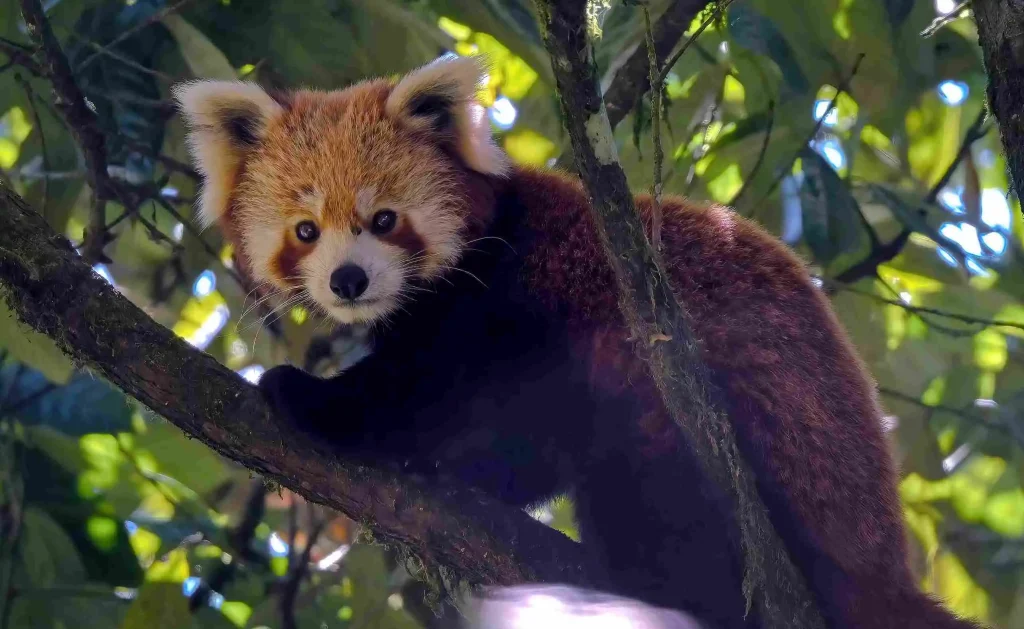
There are very few places left in India where you can spot the elusive red panda, and Singalila happens to be one of its last remaining strongholds. Older residents still talk about a time when red pandas were so common that they could occasionally be seen crossing roads or moving through nearby forests.
Today, however, the species is endangered, making every sighting all the more special. Unlike a traditional jeep safari, it is an immersive experience that takes you deep into bamboo thickets, moss-draped oak forests, and the heart of the animal’s natural habitat. The journey is as much about understanding the landscape as it is about searching for the panda itself.
For a detailed guide on what to expect, where to go, and how these expeditions are conducted, read our complete guide to Red Panda Expeditions in Singalila.
The Ultimate Singalila Trek to Sandakphu & Phalut

Long before it became one of the Himalayas’ most celebrated trekking routes, this trail was used by early mountaineering expeditions led by Tenzing Norgay. Today, it is best known as the classic Sandakphu–Phalut trek, famed for its sweeping views of the Sleeping Buddha, the iconic silhouette of the Kanchenjunga massif.
The journey begins at Maneybhanjang, the traditional gateway to Singalila National Park, and climbs through Chitre, Meghma, Tonglu, Tumling, Gairibas, Kalapokhari and Bikeybhanjang before reaching Sandakphu (3,639 m), the highest point in West Bengal.
From there, the trail continues to Phalut (3,595 m) before descending through picturesque villages of Gorkhay, Rammam, Samanden, Sirikhola and Rimbik.
Although the trek can be tailored to fit shorter itineraries, the classic route covers nearly 70 kilometres over six days through forests, mountain hamlets and dramatic ridgelines, weaving between India and Nepal along the way.
Nights spent in family-run teahouses add warmth and character to the experience. Though considered a moderate trek suitable for beginners, the altitude should be respected, and proper acclimatisation is essential.
Stand face to face with the Himalayan Views

The mountain views from Singalila National Park are the kind that make you stop mid-conversation and simply stare. They are also the kind you never quite get enough of, no matter how many times you have seen them.
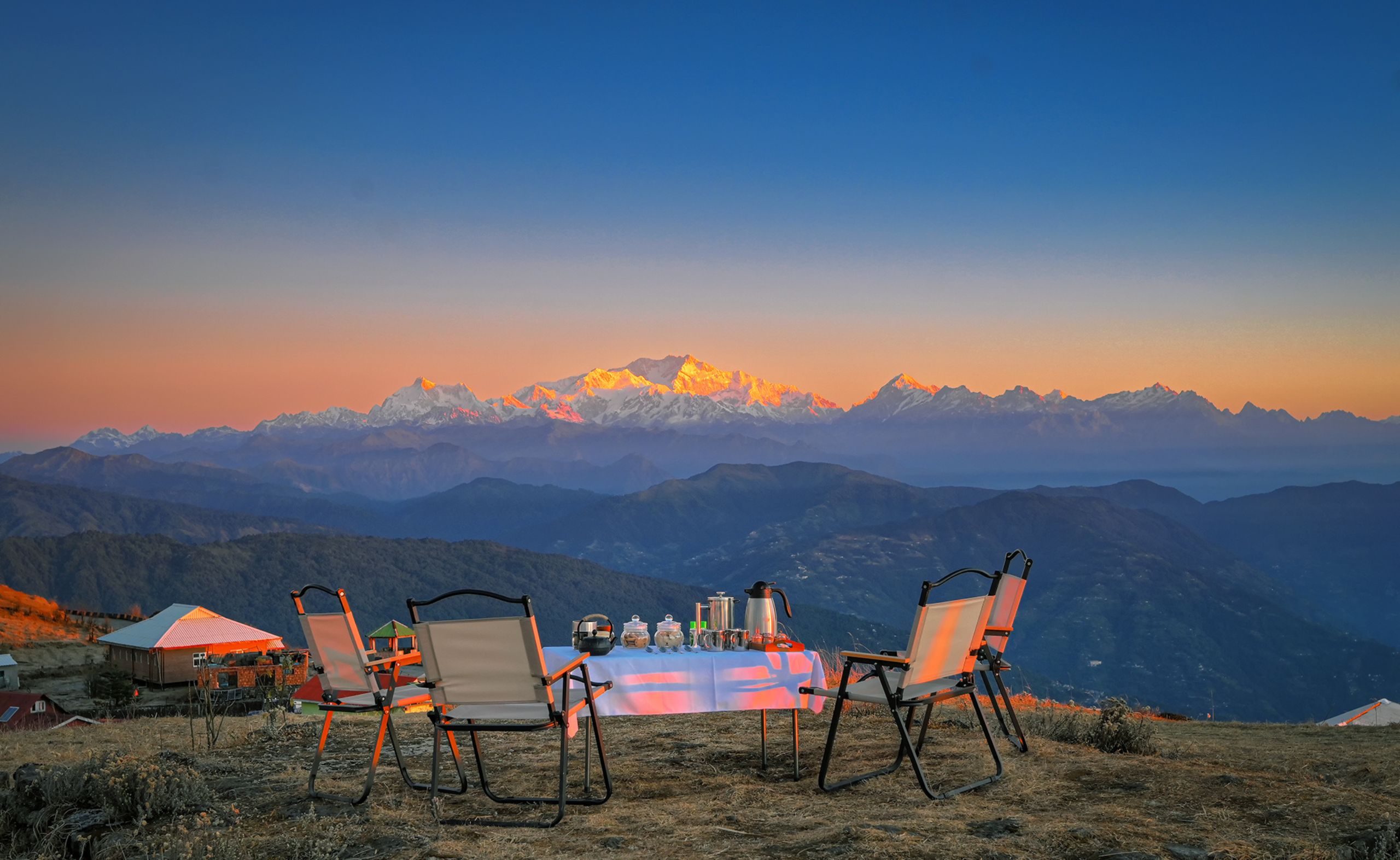
Keep plenty of space on your phone and be prepared to take far more photographs than you planned, especially at sunrise, when the first rays of the sun strike Kanchenjunga and bathe its snow-covered peaks in gold.
Post-monsoon skies, especially October onward, bring crystal-clear views of four of the world’s five highest mountains from the ridge, Kanchenjunga, Everest, Lhotse and Makalu.
The entire Kanchenjunga massif stretches across the horizon, while the distant peaks of Everest and its neighbours appear to float above layers of clouds and rolling hills.
Yet it is not just the mountains themselves that leave an impression, but the ever-changing light, weather and mood that transform the landscape throughout the day.
Discover more than 300 bird species

The 78 sq-km forests of Singalila National Park are home to rare Himalayan wildlife, including the elusive Red Panda, Himalayan black bear, clouded leopard, yellow-throated marten and pika.
Birdlife here is equally extraordinary, with over 300 recorded species, from the striking satyr tragopan, blood pheasant and hill partridge, to colourful laughing thrushes and sunbirds hidden among the trees.
Keep your binoculars close at hand for you never know what might appear around the next bend in the trail. One of my most memorable wildlife encounters happened on a misty morning near Kaiyakatta. As we made our way along the trail, a satyr tragopan suddenly darted across the road.
Against the backdrop of swirling white mist and dark forest, the brilliant scarlet-red plumage of the bird seemed almost unreal. The sighting lasted only a few seconds, far too brief for a photograph, but it remains etched in my memory.
Walk among rhododendrons Forests and orchids

Apart from being accompanied by the mountains every step of the way, one of the greatest joys of exploring Singalila is walking through its spectacular forests. The landscape changes dramatically with the seasons, but spring is particularly magical.
From March to May, rhododendrons and magnolias burst into bloom, painting the hillsides in brilliant shades of red, pink and white.
The trail winds through forests of bamboo, oak, silver fir, and rhododendron, where moss-draped trees and carpets of ferns create an almost otherworldly atmosphere, punctuated by the haunting calls of kalij pheasants and hill partridges hidden deep within the forest.
Singalila is also home to over 600 varieties of orchid species, along with wild primulas, cobra lilies, and a rich diversity of Himalayan flora. One of the most fascinating aspects of the journey is watching the forest transform with altitude.
Dense broadleaf woodlands gradually give way to conifer forests and, higher up, to stunted rhododendrons shaped by the harsh mountain climate.
Local Culture & Food: Taste life in the Himalayas

Sitting at the crossroads of India and Nepal, the region offers a fascinating window into Himalayan highland life. Yaks trundle along the trails for much of the year, carrying supplies and tourists’ luggage or grazing in the higher reaches.
In village homes, yak cheese, or churpi, is often left drying and smoking above rustic wood-fired stoves. The people, largely from Nepali and Sherpa communities, are warm, welcoming, and deeply connected to the mountains.
Their food reflects this way of life: hearty dal-bhat-tarkari, flavourful free-range chicken curry, and steaming bowls of thukpa that are especially comforting on a cold mountain day.
The first time I visited Singalila National Park, I happened to be there during Losar, the Tibetan New Year, which made the trip particularly memorable.
At breakfast, I was served a plateful of khapse (fried ceremonial bread) and a cup of chhang (rice beer). Little did I know that it is customary to keep refilling a guest’s cup to the brim, no matter how much they try to finish it.
What felt like a never-ending beverage was, in fact, a gesture of hospitality, though I only discovered this much later, far too late, as I burped my way up to Sandakphu.
Looking for the perfect base to explore the region? Discover one of the best places to stay in Singalila National Park, offering easy access to Red Panda habitats, trekking routes, and panoramic Himalayan views.
Hop on the iconic Land Rover and tick it off your bucket list
One of the most iconic sights in Singalila, apart from the mountains themselves, is the vintage Land Rover. More often than not, you’ll spot one rumbling along the trail with a quirky name or phrase painted across its bonnet, something along the lines of “Local Homeboy” or another equally memorable nickname.
These hardy vehicles have become as much a part of the landscape as the rhododendron forests and mountain vistas. For decades, they have ferried both locals and visitors along the rugged tracks that wind through the region and for a long time, were the only trusted vehicles to tackle the terrain.
In many ways, a ride in one is a Singalila rite of passage. Did you even visit Singalila if you didn’t bounce your way up the mountain in a vintage Land Rover?
If you’d simply like to experience the park from a different perspective, you can arrange a Land Rover safari through local associations. It’s a memorable way to navigate the rough terrain and visit some of the viewpoints or lakes while experiencing a mode of transport that has become as synonymous as Singalila itself.
A red panda expedition requires moderate fitness. Expect several hours of walking daily on uneven forest trails, gradual ascents and descents and cold and damp conditions depending on season.
The expedition is suitable for nature lovers, birdwatchers, wildlife photographers, slow travellers and anyone comfortable walking in mountain forests.
It may not suit travellers expecting a fast-paced safari or one that gives instant gratification. luxury-heavy wildlife experience.
Best Time to Visit Singalila National Park
March–May (Spring): Ideal for rhododendron and magnolia blooms, pleasant weather, birdwatching, and scenic forest walks.
October–December (Autumn & Early Winter): Best for clear Himalayan views, Red Panda tracking, trekking, and panoramic vistas of Kanchenjunga, Everest, Lhotse, and Makalu.
Good to know:
- A permit is required to enter the park which can be availed from either Maneybhanjang or at the entry gate in Tumling.
- All foreigners going to Red Panda Outpost can enter via Nepal and need to complete immigration formalities at Kakarvitta (Indo-Nepal border).
- A registered guide is compulsory for trekking. However, guides are not required if you are exploring the park by jeep safari.
How to Reach Singalila National Park
By Air: Closest airport is Bagdogra in West Bengal (5 hours to Maneybhanjang/ Jaubari)
By rail: Closest railway station is New Jalpaiguri in West Bengal (5 hours to Maneybhanjang)
Nearest city: Darjeeling (2 hour drive from Maneybhanjang); Siliguri (5 hours from Jaubari); Phikkal (Nepal) (2 hour drive from Jaubari)
For detailed travel routes, transfers, and entry point information, read our complete guide on How to Reach Singalila National Park.

Plan Your Singalila Adventure
Whether you are looking for a Red Panda Expedition, a Himalayan trekking experience, or a wildlife-focused holiday in the Eastern Himalayas, our team can help you plan your journey through Singalila National Park.
Contact Us to Plan Your Trip
Conclusion
Singalila National Park is far more than a trekking destination. It is a place where rare wildlife, ancient forests, Himalayan culture, and some of the most spectacular mountain views in the world come together in a truly unforgettable way.
Whether you come in search of the elusive Red Panda, to walk the iconic Sandakphu–Phalut trail, or simply to experience the beauty of the Eastern Himalayas, every journey through Singalila leaves a lasting impression.
From sunrise over Kanchenjunga to quiet moments in rhododendron forests, the experiences here stay with you long after the trail ends.