More than just a wildlife sighting, this Red Panda Expedition provides a rare opportunity to explore pristine Himalayan forests and experience the extraordinary biodiversity that thrives within them.
There are few wildlife experiences in the Himalayas as thrilling as searching for the elusive red panda in the wild, deep within the forests of Singalila National Park, where the species continues to thrive in its natural habitat.
Most travellers are drawn to the sweeping views of Mt. Kanchenjunga and Mt. Everest, the famed ridge walks, and the romantic charm of the Eastern Himalayas. Only few realize that hidden within these mist-laden forests lives one of the world’s rarest and most enchanting mammals, the red panda.
Quiet, and incredibly difficult to spot, seeing one in the wild feels less like a wildlife sighting and more like a chance encounter.
Unlike jeep-based safaris, a red panda expedition is built around patience, silence, and immersion in nature. Spotting one is never guaranteed, and that uncertainty is precisely what makes the experience so rewarding.
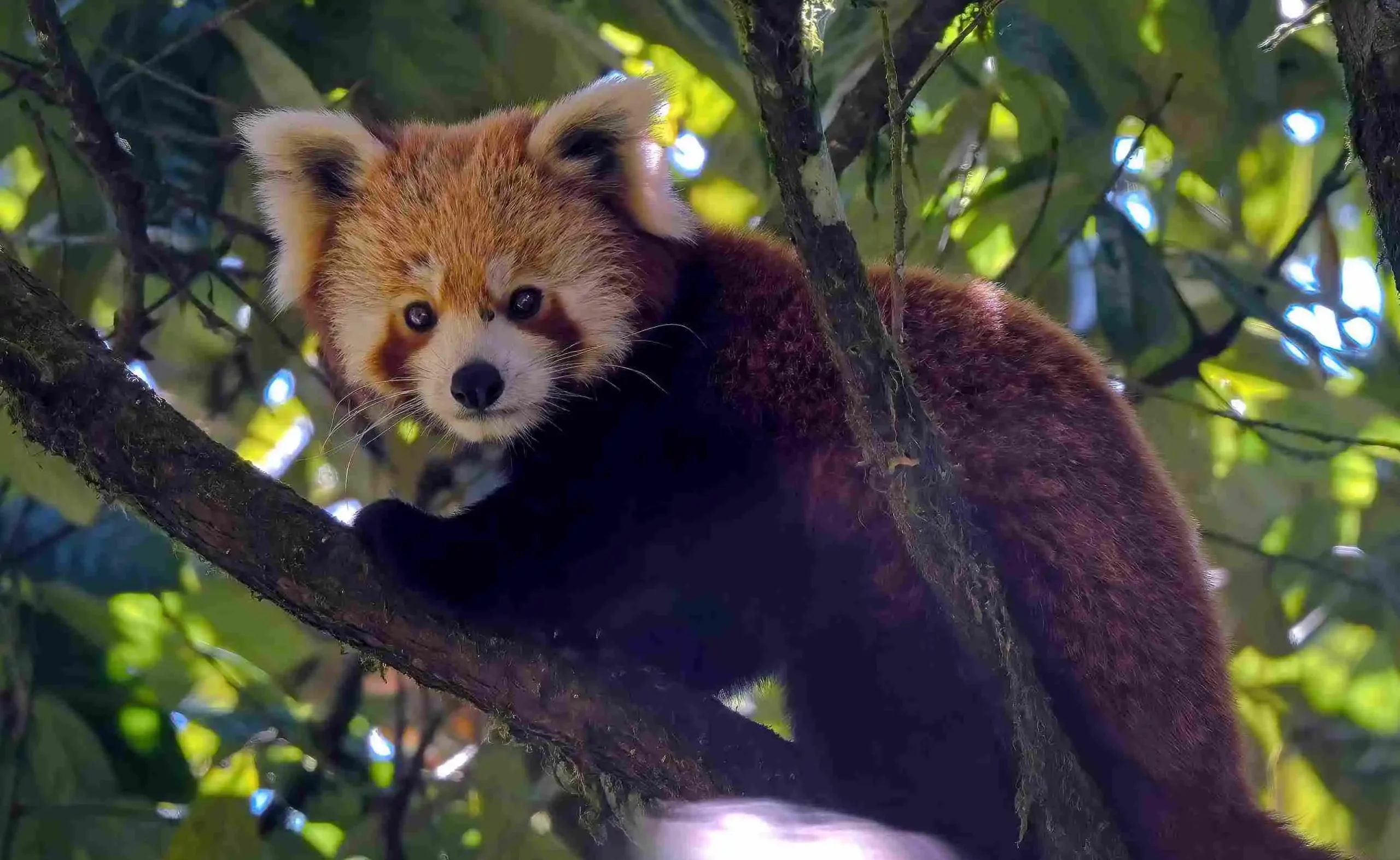
Days may pass with nothing more than rustling bamboo, distant bird calls, and footprints pressed into damp earth before, suddenly, a flash of russet fur appears high among moss-covered branches.
A red panda expedition is not simply about spotting wildlife. It is about slowing down enough to appreciate the forest in its entirety.
Why Is Spotting a Red Panda in Singalila National Park So Rare?
When it comes to rare wildlife encounters in the Himalayas, the red panda is right at the top. The species is endangered, threatened by habitat loss, fragmentation, climate change, and human disturbance.
According to the World Wildlife Fund, fewer than 10,000 red pandas remain in the wild globally, with the number of mature individuals believed to be far lower.
Shy and solitary by nature, red pandas spend much of their time high up in tree canopies, hidden within dense bamboo thickets or moving quietly through remote forest corridors. This makes sightings exceptionally difficult, even for experienced trackers.
Why red pandas thrive in the forest of Singalila
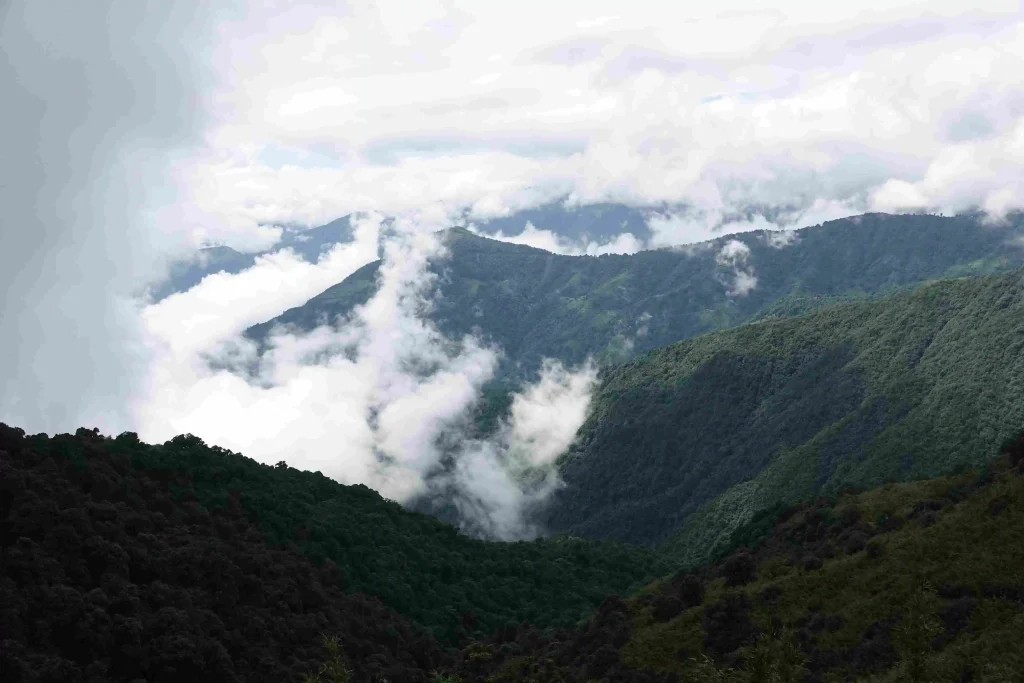
The forests of Singalila National Park offer one of the best chances in India to spot a red panda in its natural habitat. The park provides the exact ecosystem the species depends on – dense bamboo undergrowth for food.
At least 95 percent of its diet is dependent on bamboo. Large old-growth trees provide nesting and shelter and the cool, moist temperate forests are ideal for survival. Most importantly, an uninterrupted forest corridor stretching into Nepal and Bhutan, allows wildlife movement across borders vital for its survival.
The landscape here is dominated by oak, magnolia, fir, chestnut, bamboo, and rhododendron forests, the kind of high-altitude Himalayan habitat where red pandas thrive.
What to Expect During a Red Panda Expedition

A red panda expedition is very different from a conventional wildlife safari. There are no fixed sightings, no vehicles chasing wildlife, no guaranteed encounters. Instead, the experience is slow, immersive, and deeply connected to the forest.
Experienced trackers often enter the forest as early as 6 am, searching for the slightest signs of movement. Fresh feeding marks on bamboo, droppings, claw marks, or activity high in the tree canopy, subtle indicators that can easily be missed by the untrained eye.
Meanwhile, guests hike into the forest accompanied by local guides and naturalists, walking quietly through dense woodland trails. The experience is as much about observation as it is about wildlife.
Along the way, you notice rare Himalayan birds, moss-covered trees, flowering magnolias and rhododendrons, or simply appreciate the changing mountain light filtering through mist.
Expect long hours in the forest. Patience is central to the expedition.
Sometimes a red panda may be spotted within an hour. At other times, guests may wait quietly in the forest for several hours with no sighting at all.
Tracking can continue until late afternoon, though mountain mist usually begins rolling in later in the day, making visibility increasingly difficult.
If there is no sighting on the first day, the process simply begins again the next morning. That unpredictability is part of the experience.
The red panda is exceptionally well-camouflaged within the forest canopy, and even experienced trackers may go days without spotting one. Weather, season, visibility, and animal movement patterns all influence the chances of success.
Where to Stay for a Red Panda Expedition in Singalila National Park

Because sightings are unpredictable and tracking often begins before sunrise, staying close to the forest becomes an important part of the experience.
Properties located near the Singalila forest fringe allow guests to begin early morning tracking sessions without long transfers, while also offering a quieter, more immersive atmosphere connected to the landscape itself.
Experience-led stays such as Red Panda Outpost are particularly suited to travellers seeking a slower, forest-focused expedition. Here, the emphasis is less on traditional luxury and more on proximity to the wilderness, thoughtful hospitality, and working alongside knowledgeable local trackers who approach the animal and its habitat with deep respect.
On many occasions, sightings are experienced only by a handful of guests rather than large crowds, ensuring minimal disturbance to the animal and a far more intimate experience in the forest.
The atmosphere matters too. After long hours spent quietly tracking through dense woodland, many travellers value returning to spaces that balance comfort with a strong sense of place, warm rooms, hearty meals, comfortable beds, and conversations shaped by the day’s sightings, bird calls, shifting weather, and stories from the forest.
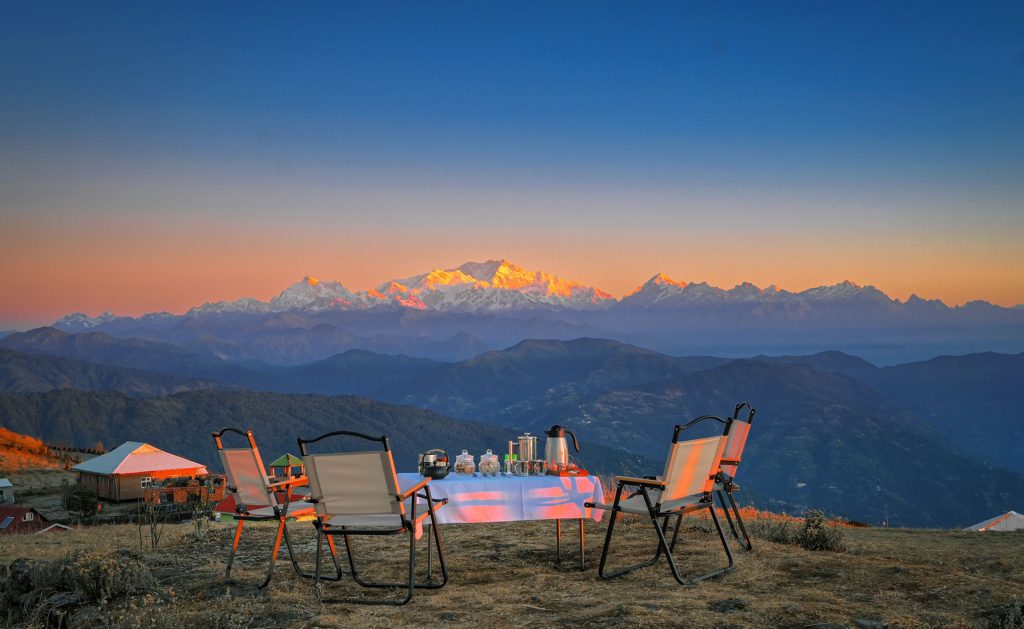
With the Red Panda Outpost team, expect smaller joys along the way. A picnic set up across rolling hills overlooking the mountains, a quiet cup of coffee after a long morning in the forest, or being welcomed into a local home to share a simple meal and conversation. The right base often shapes the experience of the expedition rather than just simply supporting it.
Why a minimum 5-day expedition is recommended
Because sightings are never guaranteed, the expedition requires at least five days. A longer stay improves the chances of sightings over multiple tracking sessions, allows flexibility around changing weather conditions and gives guests time to acclimatise gradually to the altitude.
Red panda habitat generally ranges between 2,400 to 3,200 metres, and spending more time in the region makes the experience physically more comfortable and rewarding. More importantly, it allows travellers to settle into the slower rhythm the forest demands.
Best time for a Red Panda Expedition

Spring (March to April)
Spring is widely considered one of the best seasons for a red panda expedition. This is when rhododendrons bloom across the hillsides and magnolias flower throughout the forests.
Weather remains relatively pleasant with visibility often clearer, although mountain weather has a nature of being unpredictable.
Temperatures generally range between 5°C to 15°C. The forests during this time are vibrant, colourful, and exceptionally photogenic.
Autumn and early winter (October to November)
Fresh after the monsoons, the forests are at their lushest and greenest. This season offers crisp mountain air, clearer skies, excellent visibility and active wildlife movement. October and November are also among the best months for panoramic Himalayan views.
Fitness level and difficulty
A red panda expedition requires moderate fitness. Expect several hours of walking daily on uneven forest trails, gradual ascents and descents and cold and damp conditions depending on season.
The expedition is suitable for nature lovers, birdwatchers, wildlife photographers, slow travellers and anyone comfortable walking in mountain forests.
It may not suit travellers expecting a fast-paced safari or one that gives instant gratification. luxury-heavy wildlife experience.
How to Reach Singalila National Park for a Red Panda Expedition
Reaching Singalila National Park requires a combination of air, rail, and road travel, but the journey itself is part of the experience.
The park is located in the Darjeeling district of West Bengal and serves as one of India’s most important habitats for the endangered red panda.

By Air
The nearest airport is Bagdogra Airport (IXB), located approximately 95 km from Manebhanjan, the main gateway to Singalila National Park. Bagdogra is well connected with major Indian cities, including Delhi, Mumbai, Bengaluru, Kolkata, and Guwahati.
By Train
The nearest major railway station is New Jalpaiguri (NJP), one of the most well-connected rail hubs in eastern India. From NJP, travellers can continue by road to Manebhanjan, which takes approximately 4–5 hours depending on weather and traffic conditions.
By Road
Most Red Panda Expeditions begin from Manebhanjan, a small Himalayan town that serves as the primary entry point to Singalila National Park.
Approximate driving times:
- Bagdogra Airport to Manebhanjan: 4–5 hours
- New Jalpaiguri (NJP) to Manebhanjan: 4–5 hours
- Darjeeling to Manebhanjan: 1.5–2 hours
The route passes through scenic mountain roads, tea gardens, forests, and traditional Himalayan villages, offering beautiful views along the way.
Tips on ensuring a successful expedition
Although nothing can truly guarantee a successful sighting, you can make a difference by respecting wildlife and the landscape they inhabit.
Respect distance and silence
Talk softly and move quietly. The whole idea is to avoid disturbing the animals. While some red pandas may be accustomed to seeing humans, others may be newly spotted ones and can be easily spooked.
Listen carefully to your guide, especially when they ask you to move from one place to another. Patience and silence often reward you far more than rushing ever will.
Dress for the landscape
Wear neutral colours and pack appropriately for changing mountain weather. Layering will be your best friend. Always carry waterproofs and a trusted pair of sturdy hiking boots.
Being comfortable and prepared allows you to stay focused on the experience rather than the conditions.
Carry a camera, but also curiosity
Of course, take the photographs and keep your camera ready, but also carry a good pair of binoculars. Take moments to simply be present and observe.
These are the memories that stay with you long after the expedition ends, and some experiences are best soaked in through your own eyes rather than through a screen.
Leave room for wonder
Observe everything, the trees, moss-covered trunks, orchids, forest paths, distant bird calls, and the way the hills and mountains unfold endlessly beyond the horizon.
Appreciate the effort of the people who live and work in these landscapes and what it takes to make these journeys possible.
Travel and wilderness have a way of putting things into perspective when you step outside your comfort zone and allow yourself to truly notice the world around you.
Watching a red panda in its natural habitat , quietly eating bamboo, moving through the forest, and simply being, is truly a once-in-a-lifetime experience. But it is not the only thing that makes the journey meaningful.
Nature and wildlife are unpredictable, and the most rewarding expeditions are often the ones approached with patience and presence rather than expectation.
Go with an open mind, not a checklist.
Plan Your Red Panda Expedition
Ready to experience the magic of Singalila’s forests and search for the elusive red panda in its natural habitat? Contact our team to learn more about expedition dates, accommodation, and planning your Red Panda adventure.